Part 1: My Yearly Pilgrimage to the Mecca of our game – Enjoying the reinvigorated continuities, Dreading the unpleasant surprises, and Preparing for an Orderly Future
(Join us in four weeks for Part 2: Feeling like a Beginner Again, Becoming Backgammonly British, and in five weeks for Part 3: Make Speedgammon Great Again and Always a Bridesmaid and Never a Bride at Speedgammon)
a. Tradition, Continuity, Certitudes, and the Mecca of our game
Much that is broken about our Disordered World is paradoxical and absurd. Take as example number one, the absurdly low entry fees at British Backgammon events relative to their European counterparts. Fortunately, despite living through the Global Enduring Disorder, some things in our day and age do actually make sense.
To my mind, the continuities of the World Championships of Backgammon are a lone spot of order, predictability, and community in our tariff-riddled, war-torn, and deglobalizing international environment. We, as the global community of tournament Backgammon players, have our annual Thanksgiving, Royal Ascot, and Hajj all rolled into one.
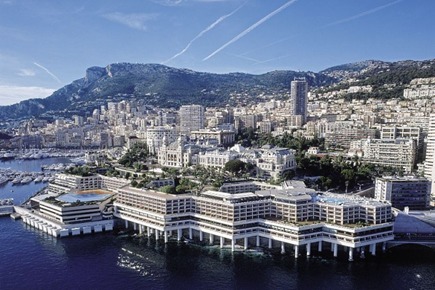
It takes place at our Mecca: the Fairmont Hotel, Monte Carlo — overlooking the famous Formula 1 hairpin to the North and the Mediterranean to the South. And just like the Hajj, all players of any skill level must make the pilgrimage at least once in a lifetime to this sacred ground, if they are to fulfil their obligations to our shared faith.
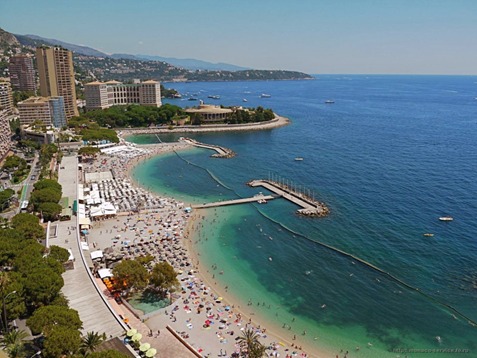
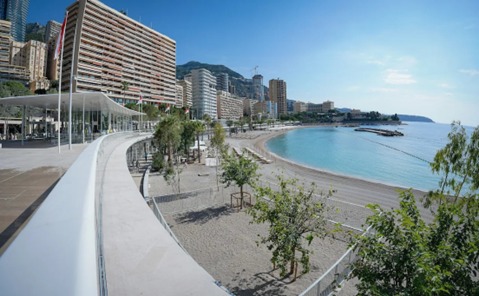
Therefore, to honour the continuities of tradition and to fulfil Backgammon’s communal religious obligations, the last week of July every year, any serious international tournament Backgammon player knows where he or she will be and knows at what beach (the renovated Larvotto) she or he will be plunging into the Mediterranean and dodging the jellyfish.
My father has drilled into me that life has few certitudes other than death and taxes. He was only partially correct.
We are fortunate as Backgammon players. We have many more certitudes: 1) The prices of the rooms at the Fairmont will constantly inflate, even when booked far in advance with the discounted Backgammon rate. 2) The cost of laundry or of a Coke in the playing room will always verge on the exorbitant — yes, that is right — a small can of Coke now costs 10 Euros in the playing room. 3) The Monaco skyline will get ever more futuristic and the previously peaceful views towards Menton and Cap Martin evermore obscured (the new spaceship-like apartment complex to the East of the Fairmont is truly heinous).
But there are more pleasing certitudes as well: 4) the food, sunshine, and camaraderie in our Mecca will be glorious. As a creature of habit who genuinely hates change, I love this sense of pattern and ritual. I put up with the rip-off prices, embrace the hilarity of the nouveau riche, and try to be genuinely amused by some of the extravagance that Monaco affords.
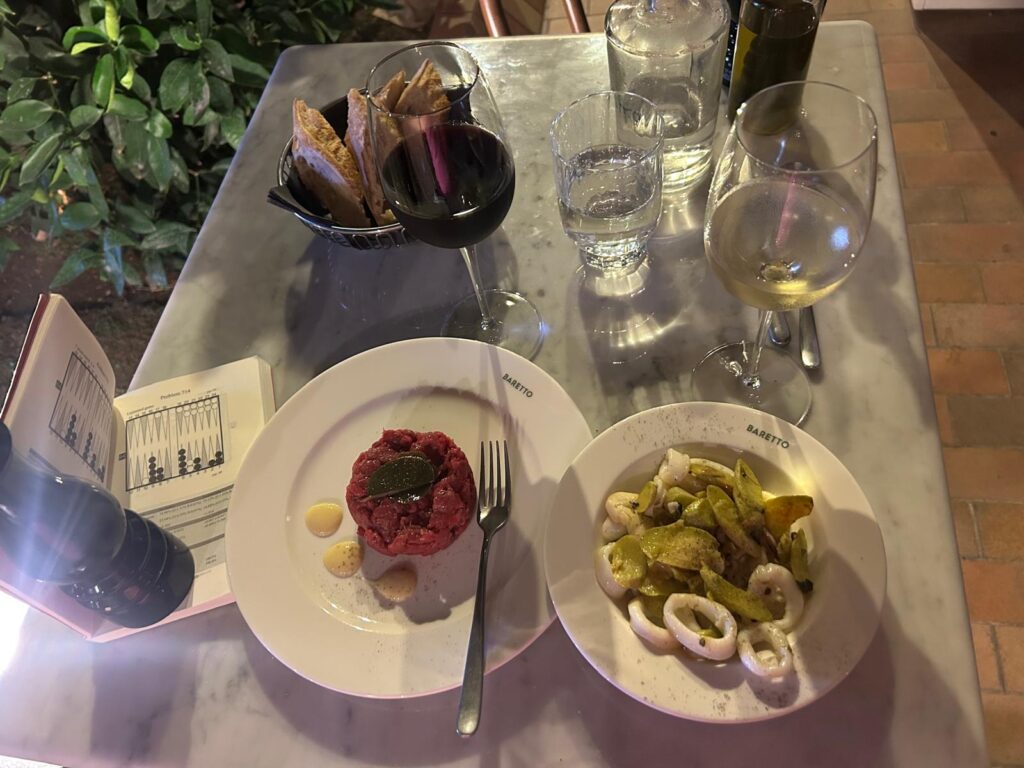
Moreover, if you do your research and cultivate relationships with loyal servers, you can eat well affordably:

So rather than join the other intrepid and entertaining UKBGF correspondents, Will Cockerell and Pete Heskett, in hating the tackiness of all the Botox-ed lips and glitzy cars, I would like to propose another approach: enjoy Monaco as a precision sociological lens into the changing tastes of our increasingly unequal world.
This year there were many, many more young women paused in the middle of the sidewalk, blocking traffic, taking pictures of themselves in front of various landmarks. There were also many more millennials of both genders bringing their phones into the pool or even into the sea to take photos of themselves. Sad, yes. But also hilarious.
And we almost missed out on all of this.
There was a chance after the death in 2021 of our sect’s founder and controversial shaman leader, Patti Rubin, that our community would lose this continuity to Monaco and to our Mecca. Fortunately, Marc Olsen and Backgammon Galaxy stepped in — saving the event and making every year better than the previous one. This is no hollow boast. I am most certainly not on the tournament’s payroll (but I would accept a comped room for doing some commentary and the auction—hint hint). Either way, I will sing the tournament’s praises as I see fit and I will bitch every year about what I think is unfair and needs to be changed.
But my overwhelming feeling is: Ah, the joys of returning to a more pristine Mecca than one remembers it! I’ve played THE tournament 14 of the last 18 years, and this was by far the best year yet, which might be surprising to hear from someone who at the 2025 BGWC: 1) won four straight matches in both the Monte Carlo Open and the Main Consolation yet made NO money in either event; 2) had two disputes requiring the tournament director; 3) got eliminated in the first round of the main and of the high roller; and 4) lost all of my bets at the bookmaker. My winning of two UKBGF qualifier Satellites and making the finals of the speedgammon only meant that I defrayed half of my entry fees (yippie) and less than a quarter of the hotel costs (hooray). So given the insane expense of the hotel and high roller entry, etc., I was not even close to breaking even. Yes, this was a very expensive and stressful vacation. And yet, the tournament was so worth it … It was even one of the best weeks of my year.
Partially because the weather was so mild and the sea so pristine and partially because I got to initiate a neophyte into our faith of international tournament Backgammon, Becca Sweetman – fellow Brit and now paid up UKBGF member.

b. The best year ever and upping the gala’s glamour game
Remember in the early 19th century when there was no proper sewage and running water at the Kaaba and many pilgrims on Hajj got cholera and spread it back to their home countries? For a decade or so, it happened year after year. But it wasn’t like Muslims stopped undertaking the Hajj. They did so, knowing that there would be public health crises, and likely stampedes, wars, and marauding Bedouin to boot.
Hajj was simply such a core tenet of the faith. And the Hajj tournament organisers listened to feedback. The Sharif of Mecca — encouraged by his nominal suzerain since the 16th century, the Ottomans — installed running water faucets (hanifiyya, the Arabic term for faucet even became the name of the Ottoman’s preferred madhdhab or legal school of Sunni Islam) and the cholera epidemic was solved. Of course, the fact that kafir French epidemiologists were consulted caused a backlash at the time, but in retrospect it showed that the organisers were listening to outside feedback and trying their best.
This is not so dissimilar to the transition we are now experiencing from the days of founding shaman Patti Rubin to the modern era of Marc Olsen and Arda Fındıkoğlu. Remember under Patti when the early session nominally began at 3pm and yet by 4:15pm you could be waiting around with no opponent and no penalty points? Remember when the night session began at 10:30pm and might not end till 3am? Remember the old plastic boards and horrific blue cups that hurt your hands? Remember when you could pick your opponents in the doubles, as you could rebuy endlessly till the bracket was filled and yet no one was ever free to play, so the side events were all played chaotically on the last Sunday afternoon after the Last Chance?
Even under these conditions, we didn’t abandon the faith. We stuck with it and the community has advocated for improvements, and Marc and BG Galaxy are leading us into a tech savvy and YouTube friendly future to grow the game.
Yes, there are still incremental improvements to be made in the organization and player experience, but we must congratulate Tournament Director Arda Fındıkoğlu and his team, BG Galaxy, Mate Feher, Bill and Tara, and Remington Davenport, all of whom have brought us these improvements in vibe, streaming, transcription, female participation, timeliness, format, and prize pool. Many people, quite a few Brits among them, like to complain that capitalism has gotten hold of the tournament and things are changing for the worse. This is simply false! Most of the people who claim this didn’t play the tournament ten years ago. They simply don’t know.
Yes, there are dislocations, but the tournament is changing for the better and is being dragged into the modern world. It will also surely get better as the new organizers have shown that they are attentive to feedback and are serious professionals.
The vibe in Monaco this year was noticeably different to years past and Remington (the organiser of the NYC Backgammon Club) is a big part of this. There were more young people, more new faces, more women, more non-Europeans. Moreover, Tournament Organizer Marc Olsen has decisively re-invigorated the tradition of the Gala Dinner and the Auction. This was most welcome and the food and space in the Fairmont’s old Casino room was perfect.
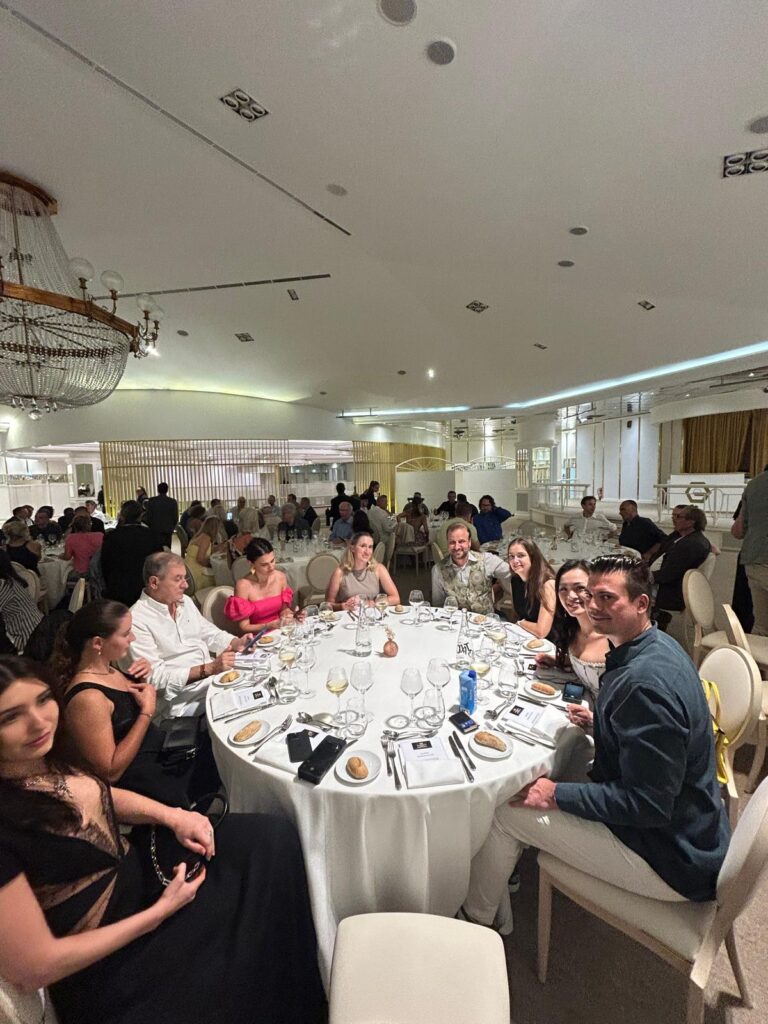
So, reinvigorating the Gala dinner while nodding to its prior traditions was definitely the right move. I give it a 9 out 10. The food was genuinely excellent and the wine more than acceptable. The sound system, presentations, honouring of previous champions, and auction could still be improved. But these will be fixed next year — I have faith. Speaking of glamour, tradition and innovation, this year the social media/content creation game was vastly improved. Nick Barton has been brought on by Backgammon Galaxy as its COO. He was previously Vice President of Chess.com. He brings with him relevant connections in new media to expand our game. Yes, there were small hiccups in how some commentary was done (and some matches were marred by commentators veering off-piste about irrelevant topics) and some ads were misplaced or repetitive, but the point is the movement is in the right direction. And we are more and more a community where ideas are shared openly and criticism is taken on board. I believe Nick will pull rabbits out of hats and get our game the big social media coverage it deserves.
He has already initiated very clever partnerships. Internationally acclaimed Chess influencer Hannah Sayce was flown in from Australia and some organizational glamour was brought into the playing room from Sweden in the form of Lisa Thorander who had previously cut her organizational teeth at the Swedish Open.

These two were not just pretty faces—they were tech savvy and motivated staff members of the kind that the tournament had lacked previously. In a further nod to making upgrades while sticking with tradition, paper draws were used for all the events and I think this is a nice touch as well. Long may the paper draw with names drawn out of a hat continue.

c. Unpleasant Surprises, Late Registrations, and Poor Communication
Sometimes even with the best intentions, things can go a bit awry. Unfortunately, I was told at 12:05pm before the 1pm start of the first round of the main tournament by a newer member of staff that the drawboss.dk website was where the draw was being posted. He offered to show it to me on my phone. There I saw that I had a bye and a reasonable draw in the next round. He said I could go to my room, as I would not be playing the first round, and even though the second round pairings were drawn there were no boards available until three hours later.
I knew my opponent and I chatted with her. We were both happy with our byes and the convivial pairing — and agreed to coordinate to meet later. Then I went back to my room, came back to the playing room to place bets, only to be reached by staff saying that I needed to go to my table and play my match as my draw position had been changed to an anti-bye and that I had to play a late registration entry who happened to be a former world champion. I complained to Arda and said it wasn’t fair. Independent of whatever you think of late registrations after the draw is published, I was already told by a member of staff that I had a bye–and then placed significant bets based on my current draw position. Arda said it didn’t matter what I had been told previously or what was posted on drawboss.dk. There is an argument to be made that Arda is the best tournament organizer in the history of Backgammon. The situation I faced was not only not his fault, he handled it well. It was the product of the tournament structure and the communication thereof and there was essentially nothing he could do to avoid it.
I found this highly unsatisfactory. And moreover, nerve-wracking. I make the trip every year to Monaco trying to win the whole thing and each year it seems to get snatched away for one reason or another. But this was new, to be told I have a bye and can go to my room, then I foolishly choose to return from my room to place bets and hence be contactable, only to be told I have to play a match instead and now have an anti-bye… This was a new way to transition from thoughts of winning it all to the very likely probability of a swift defeat.
Of course, the tournament organizers and directors have the right to have whatever system of byes and anti-byes and adding late registrations which they please — so long as it is announced CLEARLY in advance, is in KEEPING with our traditions, and is based upon a draw process that is TRANSPARENT. The draw used to be publicly done out of a hat or bowl leading up to playing time. That would work. Then there is the issue of how the current procedure of late registrations was communicated.
For the most important match of the Backgammon year, I don’t think it is fair to have a player thinking he has a bye who then checks at the bookmakers to wager on his good luck and finds out he is handicapped at a 40:1 chance to win the tournament, places his bets and is ready to go swimming … and then a half hour later, he is told, oh that was a mistake, you have an anti-bye and are playing Peter Jes Thompson, don’t worry about your bets, Morten Holm will cancel any of the bets you made if you want. When I went back to Morten to debate such a cancellation my chances to win the tournament had dropped to ~130:1. In real equity terms my net present value (including side pool) had decreased by more than 3000 euros due to the last minute draw change (that is nearly twice the entry fee). Is that something the organisers can take away, slashing your expected equity by 70%?
Maybe I am making a mountain out of a mole hill. I am not sure. But my obsession here has a logic. I am interested in fairness and I am not emotionally well equipped to handle a reversal from good news to bad when I wait all year for this tournament and I was already mentally getting my swimming trunks back on… So I firmly believe we need more order and safeguards to prevent people from being exposed to this kind of traumatic mixed messaging.
Moreover, I just don’t think there should be late registrations. They cause chaos, make the organisers’ lives more difficult, and reward people who are not prepared or can’t be bothered to register on time. They are simply not needed. I doubt the World Series Of Poker would allow such a late registration, and many other prestigious Backgammon tournaments simply do not allow registrations beyond the initial deadline and certainly don’t accept registrations after the draw is made.
But back to my situation: Stupidly, I didn’t cancel any of my bets and they all lost. Also, out of a surge of novel patriotism, I wagered on the British Team at the Auction and despite Seb’s and Gaz’s world beating PRs, they tragically lost. But I was happy there was the auction and hope I can participate in bringing it to fruition in future years. So despite my initial bad experience of the new format, I will joyously proclaim publically that: I love the new format and I love the new higher entry fee plus qualifiers/satelittes. And I actually love the vision that Marc, Nick, and the BG Galaxy Team have for the event. Execution will improve–of this I have no doubt. We as a community need to support them to create the communal experience we all deserve.
d. My quest for a level of entry fees that would make us as respectable as poker or chess; the need for no anti-byes, and a truly fair tournament structure
Despite what Mislav and Will Cockrell have eloquently written that lower entry fees and multiple elimination will grow the game, I assert that the economics and practicalities prove them wrong. Firstly, even though the entry fee was raised from 2024 to 2025, this summer’s BGWC saw the highest overall participation in recent memory. Secondly, even if we accept Mislav’s contention that a very much lower fee would vastly increase the number of participants, combine this with his desire for a triple elimination tournament with more than 500 players, he then creates a tournament structure which is not feasible. Not at the Fairmont or anywhere else in Monaco. There simply isn’t the space in the playing room or at the hotel. And an increased number of players would take much longer to complete because there would have to be more rounds – and no one has the time in their calendars for a 15-day tournament. Also it wouldn’t be fun. Sponsors and YouTube audiences want high profile, elegant, decisive — not chaotic, unclear, and busy. Mislav’s proposed multiple-elimination Swiss format is for nerds or backgammon geeks. Non-experts don’t know what a Swiss tournament is. It is not TV-friendly and people won’t understand it.
Also for those who say let the World Championships be played in a rotation of Tokyo, Dubai, Cyprus/Istanbul, Vegas, New York and Monaco — that is simply insane. Who would decide this? Who would coordinate the organisers? Who would help people figure out about how to book everything in the new city? We can’t move the tournament venue around every year, as we won’t build traditions and won’t be able to establish continuity. That is a recipe for having rival world championships and chaos. The real deal has to be in the same place, with the same format, at the same time of year ever year, so people in the community can anticipate it and make plans. It needs to be legitimate, predictable, and filled with certitudes and tradition.
Events like WSOP, the Proms, or Wimbledon have their venues, time of year, and formats permenantly fixed so people can depend on them and plan ahead. Wimbledon has such a stature globally because it has been in the same venue, on the same surface, at the same time of year, with the same strawberries and cream, with the same 128-player draw since 1877. That is why it is the mother of the Grand Slams. It is more prestigious than the US Open because that moved from Forest Hills to Flushing Meadows and from Grass, then to Har-tru Clay, and then to Hard Courts. Wimbledon is glorious because of its certitudes and continuity. In 1877 Wimbledon, was played via the same best of 5 sets format, playing on the same surface as they do now. In 1947, they established the 128 player draw and have stuck with it. Yes, the racket technology has changed and they introduced the tiebreaker, but other than that it is virtually the same. The continuities have outweighed the change. And change has been adopted to preserve the spirit of continuity. The only change that has been encouraged is that the money has been encouraged to trend upward.
e. What can we learn from a comparison of the BGWC to Wimbledon?
I am certain that to attract sponsors, prestige, and media the format needs to stay the same, and the glory of our traditions needs to be built up in lockstep with the prize pool. Exactly as with the prize purse at Wimbledon. And in our game, this means that the entry fee should be much higher than it is. I predict as the entry fees increases, a Veblen effect will emerge. Namely, the higher the entry fee, the more we will grow the game, the more sponsors and major brands will be interested, the larger the pay out and more glamour at the event, the more media and influencers will be interested, and more of ‘the right people’ who can grow our sport will be drawn to participate—either as players, media, sponsors, or boosters. I think it is not impossible to attract celebrities from poker, chess, and even real estate and hedge funds. But they won’t come if they have a .1% chance of winning 80k Euros and the opponents are mostly balding overweight nerds in tee shirts. They will come if they can play fun satellites back home or online, and the event has glamour, media, and there is a chance at millions and coverage by ESPN, the FT, and major social media influencers.
Two years ago I wrote a UKBGF article to this effect: Let’s Go Back to the Future to Reinvigorate the Backgammon World Championships. I will not rehash all my arguments here. Essentially, my contention is that we need to legitimize and make respectable our sport by making winning the World Championship of Backgammon confer life changing money, fame, and prestige. I believe we are moving in the right direction and that Marc Olsen and Nick Barton will take us there.
I also think Marc has hit on a variant of the right format — single elimination is best as it gives casual players a better chance of winning. It also resembles a Wimbledon-style tennis tournament, which everyone is familiar with. Our 17 points is their 5 sets. So now that we have this format, let’s make it a tradition. Let’s not switch back to double elimination. Just as matches later in Wimbledon are more likely to have tiebreakers, matches later in BGWC should be more likely to have jaw dropping recubes and comebacks by being slightly longer. From the 1970s until the 2010s, it was Single elimination of 17 point matches, ultimately increasing to 25 points, so there is historical legitimacy for this format and we should stick with it. It makes it very glamourous to be playing a 19 or 21 point match as this is the only time in the year that one would do that. I do think the rounds should increase in length as the tournament progresses, just as they used i.e. to 19 points for the round of 64 and 32, then to 21 for round of 16 and quarters, then 23 for the semifinals and 25 points for the final. All modelled on how it was in BG’s glory days when people wore bowties in the playing room.
Furthermore, now that we have moved to the Satellite system, I think there should be no late registration or byes and anti-byes in the World Championship. The draw should just be capped at 256. Just as all Tennis majors have inflexible 128 draws, we should always have a 256 draw. No matter what. Always a full 256 draw. Following the model of Wimbledon doesn’t seem like a bad idea.
I advocate for people to have to register a minimum of two days before it starts and for registrations to begin being taken during the Monte Carlo Open. Then once the registrations are in, we can have enough satellites of different lengths and entry fees in the remaining time to fill exactly the remaining spots. Additionally, we can have most of the qualification in the Spring at the national level via the Federations and on BG Galaxy, BG Hub, and other online platforms.
As it is now, the playing room and the hotel capacity can barely accommodate the size of the tournament we have already achieved! And backgammon is growing in popularity globally. Why are people talking about making the main draw of the BGWC bigger? Why are they talking about Swiss? Are the matches going to be played in Beausoleil? Or in Nice? Or God forbid online? No! They have to be played in Mecca to be legitimately holy.
I know there has been a reluctance for capping the entrants or requiring pre-registration. Yet for the Main tournament there is a profound logic. People don’t rock up to Wimbledon the day before and get into the main draw of the tournament. A certain number of spots are allocated in various ways and then there are live qualifiers on the days before to fill the remaining of the spots. For us, one option would be that Pre-Registration money can be wired or sent by PayPal as at UK tournaments. If BGWC organizers don’t want to take any money digitally, it can just be a requirement that people are there two to four days in advance (rather than one day in advance as at present) and certain side events can be run fully first for those who are not doing post-registration qualifying.
For example, once people have registered, I think it would be super cool to have the speed gammon played speedily, perhaps all in a row say the afternoon of the in-person registration, one day after the Monte Carlo Open, i.e. two days before the main tournament. I also think it would be super cool to have the Advanced tournament run before the Main and the top 16 would qualify for the Main and have their prize money allocated towards that. Then concurrently to the Main championship but possibly at alternate venues if space becomes an issue: the Intermediate, Under 18s, and Women’s tournaments can focus on hobbyists, spouses, partners, and children.
I also like the idea of including a novice tournament which all intermediates, advanced, kids, and women can play in so long as they have NEVER PLAYED AN INTERNATIONAL BACKGAMMON TOURNAMENT BEFORE. I also really, really like the idea of after the qualifier period only for those who don’t qualify having a concurrent 5 point cubeless Middle Eastern Sheshbesh tournament with big money in it. In short, all these systems allow for the full registration to be initially fully completed, then to have various systems to conduct qualifiers / satellites to be run to fill the correct number of spots, while incentivising people to be there and to give them things to do after or to support friends and family if they don’t qualify.
And since we are a community, if you still want to rock up to the Fairmont only on Thursday morning of your first match in the main, you can always have a friend register for you, as I have done for many friends over the years. Backgammon is growing and if we let things just continue willy-nilly, soon we will be playing a 512-draw and that will be too chaotic. It will also make the Consolation a nightmare. The BGWC is supposed to be a relaxed and enjoyable vacation. Mislav’s proposals would make everything less spacious and more rushed. The holy of holies in Mecca only has so much space and only so many pilgrims can fulfil their spiritual obligations at one time. Just like on Hajj, we need to prevent stampedes and keep things orderly.
My system can pin in place a constant 256 draw of people willing to pay the entry fee (or have it paid out of their winning a satellite or qualifier previously). I think we should strive for at least a quarter of all entrants to have pre-qualified via national satellites at affordable prices, and then everyone will play the side events while stragglers who are also interested in super jackpots, novices, Sheshbesh World Championship, intermediate, and doubles can compete for the remaining spots. And if one year the number of real registration entrants is getting perilously close to 256, then the price of the main entry should be announced to be raised for next year to a point where only around 200 people would want to enter at that price point, and the rest can be filled via satellites on the preceding two days.
In other words, now that we have a format; don’t change the format, make it known transparently to all Backgammon players and evangelize it on our streams and via the national federations’ websites. Simply change the entry fee upward each year to grow the prize pot to keep the numbers in the main at roughly 256 so the event can be comfortably played from Thursday to Sunday with no byes and anti-byes. Furthermore, as the entry fees would go up every year, you just need to have more rounds of satellites for the qualification in the days preceding the event… And most crucially, as entry fees increase you will have the ability to run more multi-round satellites and qualifiers that can be entered for only a hundred dollars or GBP or less run by the different federations online in advance yielding the full entry fee and hotel and travel costs to allow people of any budget to participate.
I would love to see the entry fee get north of 6000 Euros so that the Noah Segals, Gus Hansens, and Abe Mosseris of the World would actually consider it worth their while to attend the event. I think it is not mentioned frequently enough that of the genuinely top 50 players globally at least fifteen don’t attend on any given year because ‘it isn’t worth their while.’ Fan Favourite and consummate pro Wilcox Snellings chose to ‘take this year off’. I would argue the fee structure just doesn’t incentivize him to attend. As a comparison, The World Series of Poker Main Event has a $10,000 buy‑in for No-Limit Hold’em, and with that price structure in 2024 they had 9,735 entries and paid out ten million USD to the winner. So what I conclude is if we follow this model for Backgammon, higher entry fees and a prize for the winner that was approaching a million euro in the main, we might eventually lure the great one himself, Lars Trabolt, out of retirement.

Interesting and informative post. I’m only a hobbyist, and never been to the BGWC, but will have to take it on trust that bringing a chess player with zero backgammon experience onto the commentary team was a ‘win’ for women in backgammon. Or even a win for backgammon. I didn’t think it added anything.
Perhaps her 53,000 Twitch followers will be inspired, and one assumes she’s now Twitching BG matches as she is chess to maintain the momentum? Her IG account (17,000 followers) has yet to feature a backgammon post. Or perhaps people would watch her all day even if she was playing tiddlywinks or solving rubik’s cubes instead of chess. I don’t know.
It seemed like a wasted opportunity and it appeared that knowledge of the game, and the hard work that comes with it, was substituted for looks and likes and for nerdy guys to ga-ga. The event had an abundance of respected and experienced female players who were presumably not regarded as sufficiently eye-catching, social media savvy, or cool. And that criteria was not applied to the men (quite rightly). Or did I miss the BGWC match where David Gandy commentated?
Awesome blog post, Jason!
I agree that the WC needs to change but not in the way suggested.
The reason that poker players are happy to pay big entry fees is that there is so much more money in poker, and even smaller events have more prize money.
I heard an interview with Bill Robertie where he was asked if he would be going to the WC in Monte Carlo again, and he replied “No, it is too expensive”. Let that sink in, a player of his ability is not going to Monte Carlo, so there must be many other players not going. Yet somehow raising the entry fees will change their minds and players will flood back?
Years ago a friend and I restarted the New Zealand Backgammon champs. Some players told us that it needed to be high entry fees and big prize money, but we went with low entry fees and side pools for those who wanted more money on the table. It worked really well and the numbers have never been better.
I would move the WC away from Monte Carlo to a cheaper European city, not rotate it thus making accommodation more affordable. Jason can run an ultra high cost event at Monte Carlo called the World Cup or whatever he wants to name it. Then let’s see which event grows.
I do like what Marc did bringing in the Chess influencer, having chess players exposed to Backgammon is a good thing. Maybe the Botez sisters or even invite Magnus Carlson?
Many of us are working with young school players, who I believe are the future of the game. I want them to see the World Champs as something they could be at rather than out of the reach.
Thanks for this review – it gave me a good feel for the vibe at World Championship. I do think there is a need to decide whether the World Championship is an event for the masses where anyone could aspire take part (in which case costs need to be dramatically reduced), or a big money, elite event where ideally all of the very top players would attend (entry and prizes would need to be substantially increased). My preference would probably be for the latter to make this the absolute pinnacle of the game, even if that means I would never take part. Currently it seems like it is neither one nor the other, but I have high hopes that it will go from strength to strength under the stewardship of the Galaxy team.
I agree with your logic and think the game has grown enough to earn both a big money elite World Championships, like we have in Monte Carlo, and a separate Championship event for the masses with lower total costs in a different location.
Jason, you make many fair points, but the constant reference to pushing up the cost will only deter players, including many of the world’s best.
Sure, as Al said, some would not get out of bed unless $100,000 was on the table, but these players will be in a very small minority. If some players want a high stakes tourno, give it to them, annually, in a place like Monte Carlo, full of tax avoiders (at our expense) and silicon, pouty types.
For the rest of the backgammon community, being part of the Worlds and winning it should never be about money. Never. It should be about the pride and honour of taking on the best, as well as representing your country. Most importantly, it should be about the involvement of as many of the world’s best players, not just those that can afford £5,000 – £10,000 in these tough economic times for many, and for the tournament to be played in a range of beautiful settings worldwide (most countries have them). If it means enhancing the use of national satellites, to allow for entry in a cheaper manner, then great. Let’s not go down the route of money dictating things though, arranging for any glamour to ‘tart up’ the Worlds or using social media, like influencers on TikTok. Just bring most of the world’s best, under one roof, and you will have everything that Marc Olsen & co. need to bring this wonderful game to a wider audience.
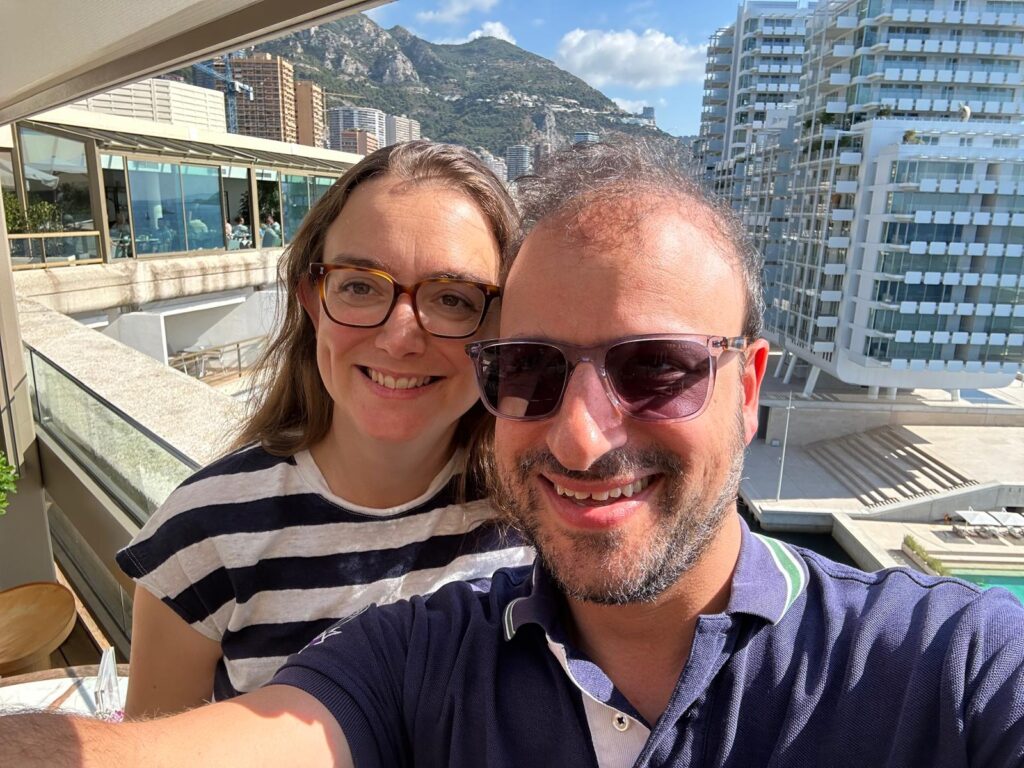
Your girlfriend looks lovely.
Of course there were not 128 entries for the first Wimbledon in 1877. There were 22. These errors don’t inspire confidence.
Two direct quotes from your blog piece….
(1) “just like the Hajj, all players of any skill level must make the pilgrimage at least once in a lifetime to this sacred ground, if they are to fulfil their obligations to our shared faith”
(2) “I would love to see the entry fee get north of 6000 Euros”
You don’t think these are slightly contradictory? Unless you seriously think your average player can cough up around 10 grand (with travel and accom) to play in a tourney.
Also you’re talking about glitz, glamour, and gaining the respectability & credibility that other big events have – and at the same time you’re advocating the use of sheets of paper and an A4 clipboard to score up results 🙂
Al Woods, doing Hajj these days costs more many thousands of Euros and people save up to do it once in a life time.
Secondly, I made very clear that people who can’t pay that amount can compete in satellites and if they win have their expenses fully paid for. Also Al if you had been to MC you would know they don’t use A4 paper but huge glorious draw sheets that you can easily see and paper is traditional and respectable for draws as it is transparent.
semantics – A4 paper it was a typo I was meaning the flip charts they use. As you’ve made the comparison to Wimbledon, I think it’s reasonable to say that you aren’t going to be hanging around wondering if Carlos Alcaraz has won on centre court, because someone hasn’t photographed a ‘glorious draw sheet’ and posted it on facebook.
Also you’re saying around fifteen of the top 50 players in the world don’t attend as it “isn’t worth their while”. How many of the top 500 players in the world don’t attend because of the cost? Anyway, if you’re the type of person who will look down their nose at ‘mere’ 95k prize, like some kind of 90s supermodel where they used to say stuff like “I don’t get out of bed for less than $100,000 – are these really the type of players you’re wanting to appeal to rather than someone who genuinely loves the game and the title means everything. You saw how much it meant to Doron while he was playing. Sorry but all this talk of ramping up entry fees exponentially seems rather vulgar to be honest.
May I repeat an earlier comment I made on Will Cockerell’s report on Monte Carlo?
“Well rehearsed on Facebook are arguments about single versus multiple elimination; expense of location; and size of entry fees.
There is only one way to settle this. Do not attack any tournament director who has put a great deal of work into organising a tournament. Let the market decide.”
Al Woods…Vulgar….spot on.
Al Woods, I am trying to grow the game and serve the community. Your very out of touch responses make me wonder if you are really ‘in touch’ with the vibe at the tournament. How many of the previous ten years have you been to Monaco to play the World Championships of Backgammon? If the answer is less than two or three, then this article is not aimed at you. No one would consider it vulgar to win more money, have more TV coverage, or have more sponsors. There is nothing vulgar about that, that would be the arrival of our game. Vulgar means popular in Latin. What we are talking about is making this sport elite. You seem to protest its elitism, but the very nature of how the bots and PR have changed the sport is to make it a very elite activity, we are just not creating a coherent or consistent ethos for the game and we must do so for it to succeed and own its elite ethos like Wimbledon or the WSOP.
Hi Jason, no offence intended I just disagree with your vision. I’ll refer to something else you said in your post “I think it is not impossible to attract celebrities from poker, chess, and even real estate and hedge funds”. If attracting bunch of hedge fund managers and celebrity players from other games – probably playing at 15PR but happy to pay a 6k entry fee – at the expense of two-time world champions staying at home (see Grant Hoffman’s reply)….if this is the future of the world champs then yes I’m very happy to be labelled as ‘out of touch’ with it.
Wimbledon has not been at the same place since 1877. It moved to its present location in 1922.
Hi Ray, of course I know there were fewer entries in 1877 to Wimby and then they slightly moved the stadium. I researched the article those are completely miniscule details and I wrote nothing which is factually incorrect it was just not worth the extra ink to make those tiny explanations the overall point is that Wimbledon embodies continuity with a short period to figure out things and then to enshrine tradition and continuity and certitudes exactly as we do in BG.
Almost everything you say about Wimbledon is wrong. There were 22 entries in 1877, not 128. The venue changed in 1922. The number of entries in the Gentlemen’s Singles was 128 from 1919, not 1947.
Today the number of entries is 128 in the Gentlemen’s Singles and in the Ladies’ Singles – I guess you forgot women. And there are doubles, junior, wheelchair etc.
Backgammon can have this size of participation – there were 730 entries in the Istanbul Championships in April, including top players but probably not your hedge fund chums.